
The ATH method for colt starting, as well as the training and retraining of horses and mules.
–


–
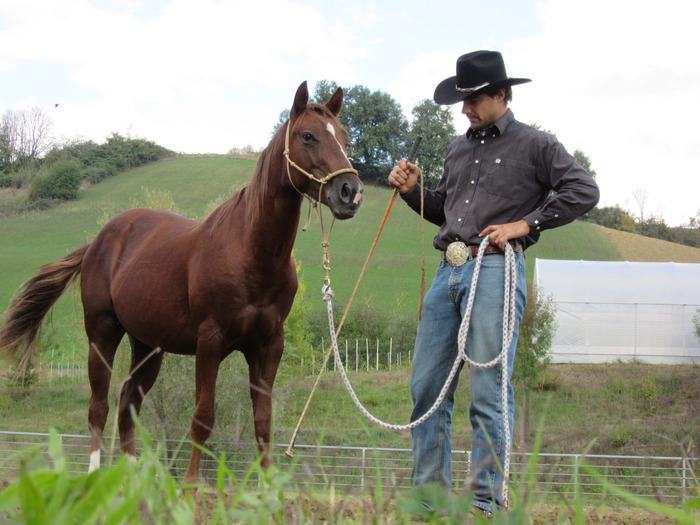
The ATH method was developed by combining techniques learned from nationally and internationally renowned trainers and horsemen with experience gained working with dozens of horses of every breed and background. At the core of the ATH method lies a solid foundation of control and respect—two sides of the same coin. We cannot have control without respect, nor can we gain respect without control. Together, control and respect foster the horse’s trust. Groundwork is the key to establishing a direct line of communication with the animal, understanding and addressing its issues, and laying the groundwork for subsequent work under saddle.
ATH was founded in 2012, when Amedeo dedicated himself entirely to the world of horses and training, leaving behind an established position as the administrative manager of a medium-sized metalworking company. His time at the Buffalo Ranch in Texas inspired him to embark on a journey to understand the language of these magnificent animals. He soon followed this with a second stint at the Selah Ranch—also in Texas—where breaking in yearlings was a daily occurrence. These experiences, combined with encounters with renowned trainers, laid the foundation for a comprehensive training method covering disciplines ranging from reining and cow horse to trail, team penning, and pleasure riding. Motivated by the challenge of working with difficult horses, he began offering clinics focused on refining riding techniques and fostering the human-horse bond through the ATH method. Since 2023, this endeavor has expanded further to include training young show-jumping horses and presenting them in competitions.
Basic check
Stop and change of direction
Attention
Rationalization
Respect for the halter
Personal space
Hindquarter control
Shoulder control
Side pass
Back
Move the shoulders.
The corridor
Distance Control
Moving on touch
Managing transitions
Stop with hindquarter disengagement
360 with departure
The half-moon
Connection exercise in a halter
Backing with flexion
Reverse hindquarter yield
Reverse shoulder yield
Reverse side-pass
Connection in a bosal
Fascione in bosal
Check bosal cessione
Check the side bosal.
Acceptance of the rider
Bosal direction
Transitions
Turns
Yielding to the bosal
Halt
Back
Large arena
Connection on the snaffle
Stretching into the snaffle
Neck control
Leg control
Shoulder control
Hindquarter control
Connection on the snaffle
Snaffle bit direction
Neck control
Leg control
Shoulder control
Hindquarter control
Yielding to the snaffle
Halt
Back
Yielding to the leg
Turns and Lightness
Acceptance of the bit
Gait variations
Side pass
Travers / Renvers
Shoulder-in / Shoulder-out
Half-pass
Collection
Correct Canter Lead
Counter canter
Extension
Lead Change
